A deck is sanded with the same machines as a floor and finished with completely different products. On the coast, the finish is the part that decides how often you do this again.
No obligation. Takes 30 seconds.
Floor Sanding and Polishing Sydney connects Sydney and greater Sydney property owners with qualified, connects Sydney property owners with licensed local floor sanders for decking. Tell us the rough floor area and whether you're in a house or an apartment and we'll match it to a licensed contractor covering your suburb. Firm per-square-metre price after an inspection.
An indoor floor is sealed under a film that keeps water out, and in a climate-controlled room that film lasts years. A deck moves with every rain and every hot day and takes direct ultraviolet light. A hard film outdoors cracks, water gets under the crack, and the finish lifts in sheets. Decking oil penetrates the timber instead, so it wears thin rather than failing.
Sydney's eastern and northern beaches are the hardest environment for a deck in the city. Salt crystallises in the surface of the timber and in any crack in the finish, and it holds moisture against the board. A deck at Bondi or Manly will want re-oiling at twelve months where the same deck at Parramatta might go two years. That is the honest interval, not a sales pitch for more frequent work.
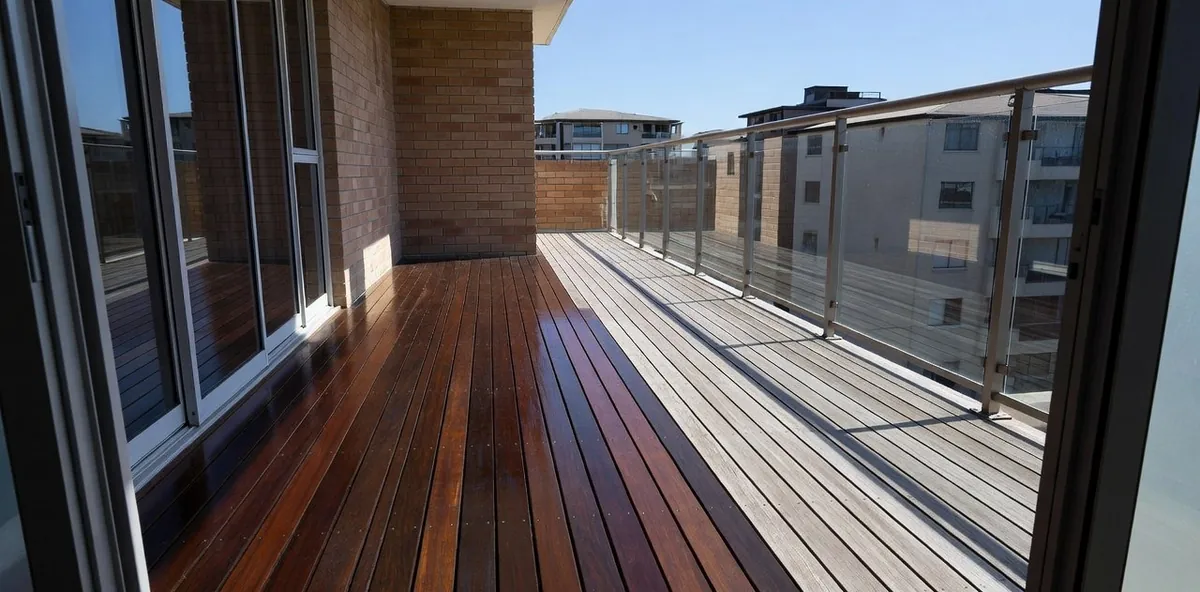
A timber balcony in an apartment building is usually common property even where the lot owner has exclusive use, and the waterproof membrane underneath it certainly is. Sanding a balcony deck means working directly above that membrane, and dropping a fixing through it is an expensive mistake that surfaces two years later as a leak into the unit below. Get the owners corporation's position in writing before anything starts.
Rot, and boards cupped badly enough to hold water. Sanding a cupped board flattens the top and leaves it thinner over the fixings, which brings the next failure forward. Any board soft under a screwdriver should be replaced before the deck is sanded, not after.
Sydney.
Where this job typically sits. Access is usually a bigger cost driver than size.
| Job | Indicative price | What moves it |
|---|---|---|
| Sand and polish, per square metre | $40 – $70 /m² | Sydney rates run above the national average. Covers sanding plus coats. |
| Typical 3-bedroom home (~110m²) | $4,400 – $7,500 | Whole floor, sanded and finished. Condition drives the range. |
| Typical 2-bedroom apartment (~70m²) | $2,800 – $4,900 | Before any acoustic underlay, which is a separate line. |
| Single room (~15m²) | $800 – $1,400 | Small jobs carry proportionally more setup. |
| Acoustic underlay, supplied and laid | $25 – $60 /m² | Strata work. The test report matters as much as the product. |
| Acoustic test report | $400 – $1,200 | Field testing to demonstrate compliance where a by-law requires it. |
| Board replacement | $100 – $220 per board | Baltic pine and old hardwood profiles are both hard to match. |
| Extra coat of finish | $9 – $15 /m² | Three coats is standard; a high-traffic hallway may want four. |
| Parquetry restoration | $80 – $130 /m² | Slower and more skilled than strip flooring. |
| Recoat only (no full sand) | $20 – $35 /m² | Where the finish is worn but the timber is sound. Far cheaper. |
Prices are indicative only and usually quoted per square metre. What a floor costs depends on its condition, the timber, how many coats it needs and whether boards have to be replaced. In a strata building, acoustic underlay and testing add to it. You get a firm price after an inspection.

The core job — taking a tired timber floor back to bare wood.
Read more →
Getting owners corporation approval before the floor goes in — in the right order.
Read more →
Meeting the noise rating your by-law sets — and proving it.
Read more →
The softwood under most inner-Sydney terraces, and why it's treated differently.
Read more →Tell us the suburb and the floor area and we'll get it to the right person.
Call 0468 165 354